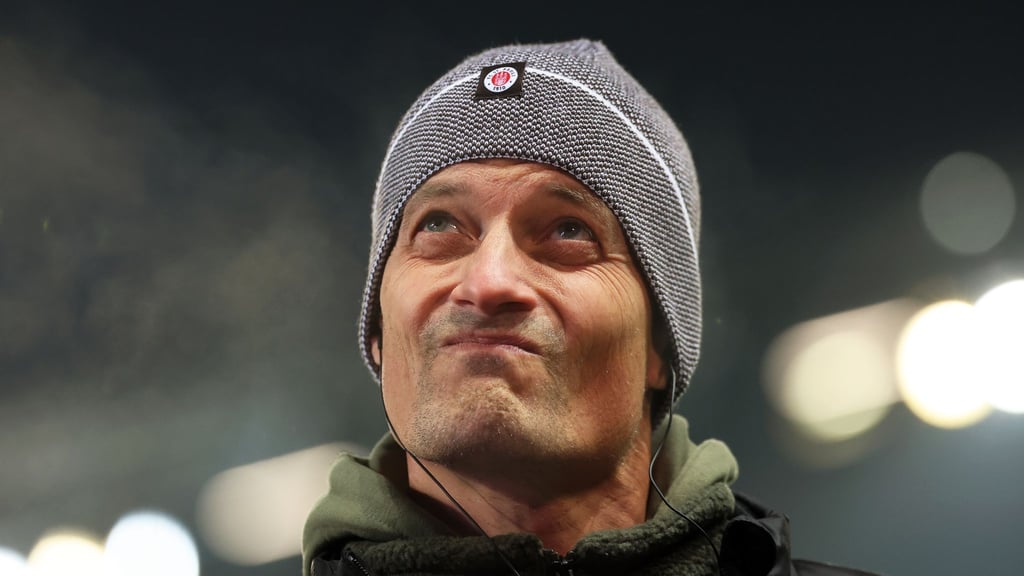
A football match is often the main event, but sometimes, the real drama unfolds off the pitch. Such was the case following the recent Hamburg Stadtderby between FC St. Pauli and HSV. While the on-field action provided limited talking points, post-match discussions quickly shifted to FC St. Pauli coach Alexander Blessin. Rumors had begun circulating, linking him to a potential move to Eintracht Frankfurt, a development that elicited a notably strong response from the respected tactician. This incident highlights a recurring theme in professional football: how a trainer reagiert gerüchte (coach reacts to rumors) – often a high-stakes dance between media scrutiny, club loyalty, and personal ambition.
The Millerntor Maestro and the Eagles' Allure: Blessin's Future in the Spotlight
The football world rarely stands still, and managerial merry-go-rounds are a constant feature, especially when top clubs are in search of new leadership. Eintracht Frankfurt, following the dismissal of Dino Toppmöller, found themselves in precisely this position, casting a wide net for potential successors. Amongst the names reportedly on their candidate list was Alexander Blessin, the man currently at the helm of FC St. Pauli. For fans of the Kiezkicker, this news undoubtedly sent shivers down their spines, particularly coming on the heels of a significant local derby.
Blessin's reaction to the speculation was anything but subtle. When confronted by a _Sky_ reporter about his personal future and the Frankfurt links, the 52-year-old responded with palpable annoyance: "Bitte, bitte, lass uns über was anderes reden, aber über sowas brauchen wir nicht zu reden," which translates to, "Please, please, let's talk about something else, but we don't need to talk about something like that." This wasn't a polite deflection; it was a clear, emphatic statement of disinterest and a desire to shut down the discussion immediately.
From St. Pauli's perspective, Blessin's inclusion on such a list is a testament to the quiet, effective work he's been doing at the Millerntor. Despite their position near the bottom of the table (16th place, with only two teams behind them at the time of the reports), the club's management appears highly satisfied with his leadership. St. Pauli operates with relatively modest resources compared to many of their Bundesliga 2 counterparts, let alone a Bundesliga giant like Eintracht Frankfurt. To be keeping two teams below them under such circumstances is, in itself, an achievement. Losing a coach of Blessin's caliber mid-season would be a significant blow, disrupting continuity and potentially derailing any progress made. His irritated response can therefore be interpreted as a defensive mechanism, a way to protect his team from external distractions and reaffirm his commitment to his current role.
Navigating the Rumor Mill: A Coach's Tightrope Walk
The world of professional football is a constant churn of news, analysis, and, perhaps most prominently, rumors. For coaches, dealing with this ceaseless speculation is an integral part of the job. Their responses can range from calm diplomacy to outright anger, each tailored to the specific context and the individual's personality. Blessin's "annoyed" reaction is a prime example of a coach attempting to assert control over a narrative that could destabilize his team and undermine his authority.
His approach contrasts, for instance, with that of RB Leipzig coach Ole Werner, who recently found himself addressing rumors concerning a potential rift between RB Football Chief Jürgen Klopp and Red Bull management. Werner, though facing equally high-stakes questions about a key figure instrumental in his own appointment, responded with a more composed demeanor. "I have not perceived any unrest for myself," Werner stated, affirming his positive working relationship with Klopp and emphasizing mutual benefit. "I work very well with Jürgen. We profit from him. Therefore, I am happy with how it is." This demonstrates a different strategy: acknowledging the rumors but immediately countering them with a statement of stability and satisfaction. To delve deeper into this contrasting scenario, you might find value in reading Ole Werner Addresses Klopp Crisis Rumors Amid RB Leipzig Struggles.
Why the difference in reactions? Blessin's situation involved a direct link to another club, potentially a mid-season move, and a question about his personal loyalty and future. Such direct inquiries often provoke a more defensive or dismissive response, as entertaining the idea publicly could instantly destabilize his current dressing room. Werner, on the other hand, was defending an existing relationship crucial to his own club's stability, making a diplomatic reaffirmation the more strategic choice. Both are valid forms of how a trainer reagiert gerüchte, but they are tailored to distinct circumstances.
General strategies for coaches when faced with such questions often include:
- Direct Denials: A firm "No," or "There's nothing to it."
- Evasive Maneuvers: Changing the subject, focusing on the next game, or stating "I only talk about my current team."
- Humor: Lightening the mood with a joke, though this can sometimes backfire if not well-received.
- Reaffirming Commitment: Explicitly stating loyalty to the current club and its project.
- Exasperation: Blessin's chosen path, signaling that the topic is unwanted and unproductive.
The Art of Dissenting: Why Coaches Push Back
When a coach like Alexander Blessin reacts with such visible irritation to transfer speculation, it's rarely a mere emotional outburst. Instead, it often represents a calculated, albeit sharp, pushback against potential disruptions. There are several profound reasons why a coach might choose to react so strongly when the media attempts to draw them into discussions about their future:
- Minimizing Distraction: The most immediate concern is the impact on the team. Players are acutely aware of media narratives, and rumors linking their coach to another club can create uncertainty, division, and a loss of focus. Blessin's strong response aimed to immediately squash any lingering doubt or speculation within his squad, ensuring their minds remained fixed on the tasks at hand, not on his potential departure.
- Protecting Club Stability and Image: A coach publicly entertaining or even vaguely acknowledging rumors can send a message of disloyalty or instability to fans, sponsors, and even potential new players. By firmly rejecting the topic, Blessin underscored his commitment to FC St. Pauli, protecting the club's image and fostering a sense of continuity.
- Maintaining Professional Integrity: For many coaches, their contract and commitment to their current club are paramount. Discussing hypothetical moves, especially mid-season, can be seen as unprofessional or disrespectful to the club that employs them. Blessin's reaction could also be interpreted as a personal stand on professional ethics.
- The "Mid-Season" Factor: Blessin's situation was particularly sensitive as the rumors surfaced during the ongoing season. A departure at this stage would be far more disruptive than an end-of-season move. His frustration likely stemmed from the sheer inappropriateness and timing of such questions, which threaten to undermine months of hard work.
Practical Tip for Aspiring Coaches: Handling media pressure is a vital skill. Develop a consistent communication strategy for sensitive topics. Whether it's a calm deflection or a firm "no comment," ensure your message reinforces your commitment to your current role and minimizes disruption. Practice redirecting questions back to the team's performance or upcoming challenges. Your goal is to be seen as a steady hand, not a source of further speculation.
Beyond the Headlines: The Ripple Effect of Managerial Speculation
The momentary annoyance of a coach responding to rumors is just the tip of the iceberg. Managerial speculation, especially when it involves high-profile figures or clubs in flux, creates a significant ripple effect that extends far beyond the immediate exchange with a reporter. For clubs, players, and fans alike, such rumors can be a source of anxiety, hope, or even frustration.
For the 'selling' club, in this instance, St. Pauli, the consequences of such rumors can be multi-faceted. There's the obvious risk of losing a valued asset, but also the potential for internal disruption. Players might become unsettled, wondering about their future under a new regime. Recruitment plans could be thrown into disarray, as potential new signings might hesitate if the coaching staff is in flux. Financially, compensation for a departing coach is often a factor, but the intangible costs of instability can be far greater. St. Pauli's apparent satisfaction with Blessin, despite their league position, suggests they recognize the long-term value he brings, making his potential departure a significant concern.
For the 'buying' club, Eintracht Frankfurt, the constant flow of rumored candidates can lead to increased public pressure. Fans crave clarity and a swift, decisive move. Each new name floated in the media can raise or dash hopes, creating a rollercoaster of emotions. This pressure can influence decision-making, sometimes leading to hasty appointments or a prolonged search that leaves the club in limbo. Managing public expectations during such periods is a critical challenge for club leadership.
The media plays a crucial role in this ecosystem, both reporting on and amplifying these rumors. While often serving to inform, the competitive nature of football journalism can sometimes lead to speculation being presented as near-fact, further intensifying the pressure on all parties. Clubs, in turn, develop strategies to manage these leaks, whether through official statements, strategic denials, or even controlled information releases to counter damaging narratives.
Ultimately, managerial speculation is an unavoidable part of modern football. It underscores the high stakes involved in coaching, where loyalty, ambition, and the relentless pursuit of success often collide in the public eye. Blessin's reaction serves as a powerful reminder of a coach's attempt to exert control in a situation that is often largely beyond their immediate influence.
Conclusion: The Enduring Challenge of Media Scrutiny
Alexander Blessin's visibly irritated reaction to questions about a potential move to Eintracht Frankfurt perfectly encapsulates the challenge faced by football coaches worldwide. When a trainer reagiert gerüchte, it's more than just a personal sentiment; it's a strategic maneuver to protect their team, maintain focus, and uphold their professional integrity amidst relentless media scrutiny. Whether through direct dismissal like Blessin's or more diplomatic affirmation like Ole Werner's, the goal remains the same: to navigate the treacherous waters of speculation while keeping the ship steady. For St. Pauli, Blessin's strong stance will be welcomed, signaling his commitment to the task at hand and providing a much-needed sense of stability. In the ever-evolving drama of football, managing the narrative off the pitch can be as crucial as strategizing on it.